

Few natural events on earth rival the drama and scale of Africa’s great wildlife migrations. Across the vast plains of East Africa, millions of animals move in ancient rhythms guided by rainfall, grasslands, and survival instincts that have shaped the landscape for centuries.
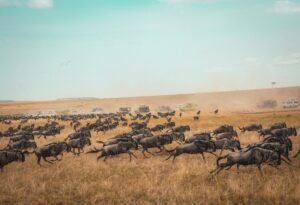
The most famous of these movements is the Great Wildebeest Migration in the Serengeti and Maasai Mara ecosystems. Each year, more than a million wildebeest, accompanied by zebras and gazelles, travel across hundreds of kilometres in search of fresh grazing. Their journey is filled with danger as predators follow closely behind and rivers present formidable obstacles.
Yet the migration is more than a dramatic wildlife spectacle. It is a vital ecological process that sustains the health of the entire ecosystem. As the herds move, they fertilise the soil, stimulate grass growth, and support a complex web of life that includes predators, scavengers, birds, and insects.
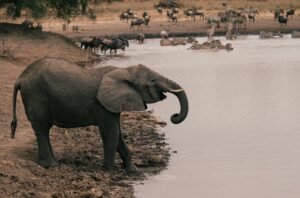
Other migrations occur across Africa as well. Elephant herds move between seasonal feeding grounds, while flamingos gather in vast numbers along alkaline lakes as water levels shift. These movements remind us that wildlife depends on large connected landscapes rather than isolated parks.
Protecting migration routes has therefore become one of the most important priorities in conservation. Wildlife corridors allow animals to move safely between ecosystems, ensuring that these ancient journeys can continue.
For travellers, witnessing such migrations offers a powerful reminder of nature’s enduring cycles. It is a moment that connects observers to something far older than modern borders or tourism itself.
And in that moment, one begins to understand why protecting these landscapes is not just a responsibility. It is a legacy.
